
5 Mistakes Santa Ana Homeowners Make After a Flood
The decisions you make in the first few hours after flooding determine your final restoration cost. Here is what to avoid.
Quick Answer
After a flood in your Santa Ana home, do not enter without checking the electrical panel first, do not rely on household fans instead of industrial drying equipment, do not skip documenting damage before cleanup, do not assume all flooding is covered by homeowners insurance, and do not delay calling a professional. Each mistake compounds the cost and the risk of secondary mold growth.
Flooding is disorienting. The instinct is to grab what you can and start cleaning up as fast as possible. That instinct is understandable, and it is also how homeowners in Santa Ana end up spending twice what they needed to spend on restoration. Having responded to floods all across Orange County for over a decade, the same five mistakes come up over and over.
Mistake 1: Entering a Flooded Home Without Checking the Electrical Panel First
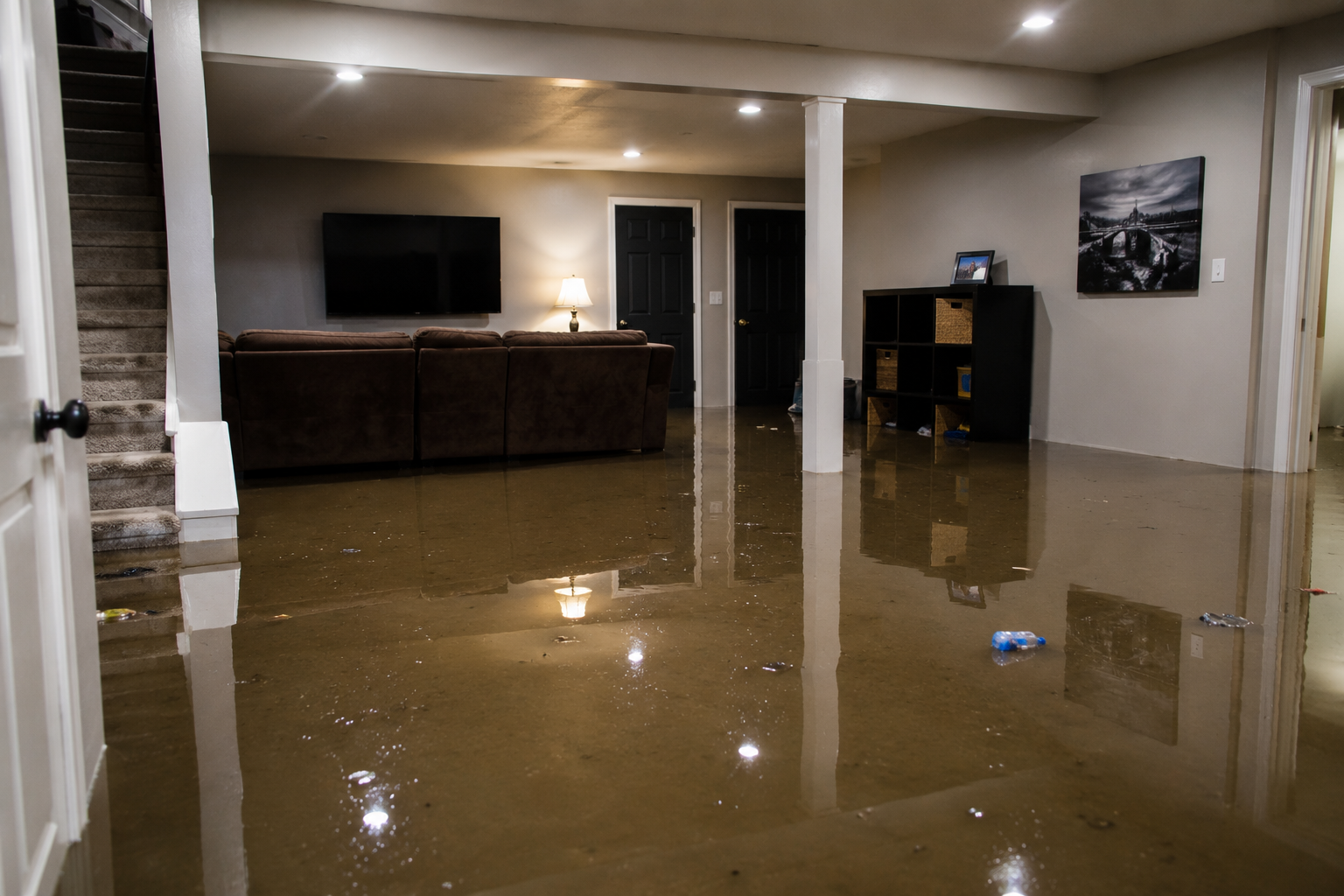
Water and live electrical circuits are a lethal combination. Before anyone walks into a flooded room, the main electrical panel must be shut off. If the panel itself is in the flooded area, do not enter at all until the utility company cuts power at the meter. Call Southern California Edison at 1-800-655-4555 to request an emergency shutoff.
What to do instead: Approach your home from the outside. If you can safely reach the main panel without entering the wet area, shut off all breakers. If you cannot, wait for the utility to disconnect power before anyone enters. This also applies to crawlspaces under raised-foundation homes in neighborhoods like Floral Park, where water pooling below the floor can come into contact with electrical conduit.
Mistake 2: Using Household Fans Instead of Industrial Drying Equipment
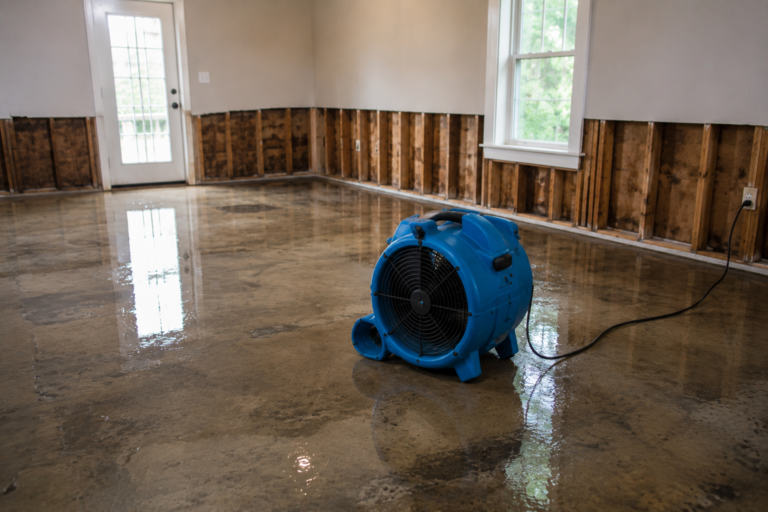
A box fan from the hardware store does not dry a flooded home. It pushes surface air around and creates the illusion of drying while moisture continues to sit inside wall cavities, under flooring, and within the subfloor. I have walked into Santa Ana homes where the homeowner had fans running for three days and the moisture reading inside the wall was still at 90 percent. Visible surface dryness has no relationship to structural moisture content.
What to do instead: Professional restoration requires commercial-grade air movers, refrigerant or desiccant dehumidifiers calibrated for the room volume, and moisture meters tracking readings at defined intervals every 24 hours. The drying logs those tools produce are also what your insurance adjuster needs to validate a proper remediation. Our flood cleanup page explains the full process. FEMA’s flood recovery guidance at ready.gov/floods also emphasizes professional drying over DIY methods for any significant flooding event.
Mistake 3: Cleaning Up Before Documenting the Damage
Your insurance claim lives or dies on documentation. Photographs and video taken before any material is moved, removed, or dried are the foundation of your claim. Once you start pulling up carpet or throwing away damaged belongings, that evidence is gone. Adjusters work from documentation. Without it, your claim is based on your word against their estimate.
What to do instead: Before touching anything beyond what is necessary for immediate safety, photograph every affected room from multiple angles. Document the waterline on walls. Photograph damaged contents in place before removing them. Keep a written inventory of every item you discard. This takes thirty minutes and can make a significant difference in your settlement. California homeowners can also check insurance.ca.gov for guidance on filing claims after a loss.
Mistake 4: Assuming All Flood Damage Is Covered by Homeowners Insurance
This one catches Santa Ana homeowners off guard more than almost any other issue. Standard California homeowners insurance covers sudden and accidental water damage from internal sources: a burst pipe, a failed water heater, an appliance line that breaks. It does not cover flooding from external sources. When the Greenville-Banning Channel overflows after an atmospheric river event, or when heavy rainfall overwhelms the storm drains and water enters your home from outside, that is classified as a flood event. Standard homeowners policies exclude it entirely by definition.
What to do instead: Review your current policy now, before you need it. If you are near the Santa Ana River corridor or a low-lying drainage area, you may need a separate National Flood Insurance Program policy through FEMA in addition to your standard coverage. Visit ready.gov/floods for more on flood insurance options. Our emergency water damage page covers the immediate steps regardless of which insurance source will respond.
Mistake 5: Waiting Too Long to Call a Professional
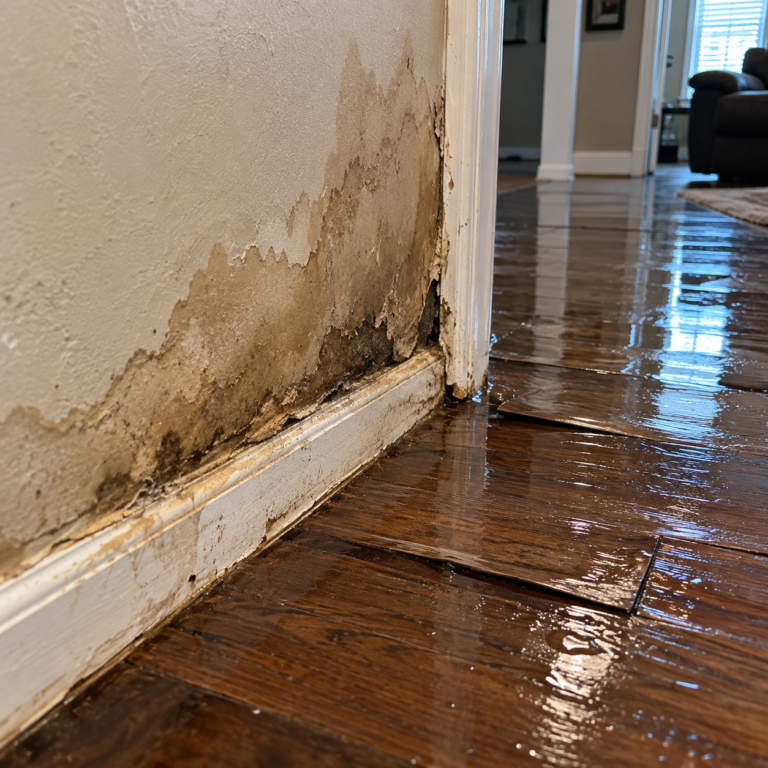
The most expensive mistake is also the most common. Homeowners wait a day to see if things dry on their own. They wait for the adjuster. They wait because they are not sure the damage is serious enough. In Santa Ana’s warm climate, mold begins growing on wet organic material within 24 to 48 hours. After 72 hours, mold colonies that were invisible become established. After a week, what could have been a $4,000 drying job becomes a $15,000 remediation with full drywall replacement.
What to do instead: Call immediately. A professional assessment costs nothing and gives you a clear picture of what you are dealing with. California homeowners also have a duty under most policy terms to mitigate ongoing damage, which means acting fast is often required to protect your coverage. We dispatch within the hour and begin extraction immediately. The longer standing water sits in an older Santa Ana home with plaster walls and wood framing, the worse it gets.
Frequently Asked Questions
Standard California homeowners insurance covers sudden and accidental water damage from internal sources like burst pipes and appliance failures. It does not cover flooding from external sources like storm surge or overflowing creeks. For that type of flood damage, a separate NFIP flood insurance policy through FEMA is required.
No. Floodwater from the Santa Ana River, the Greenville-Banning Channel, or any external water source that overflows and enters your property is classified as a flood event. Standard homeowners insurance excludes this by definition. Coverage requires a separate National Flood Insurance Program policy or a private flood endorsement.
Mold can begin growing on wet organic material within 24 to 48 hours in Southern California’s warm climate. By 72 hours, early colonies are established inside wall cavities and under flooring where you cannot see or smell them yet. By the one-week mark, a moderate flood event can produce significant mold contamination requiring full drywall removal and remediation.
California homeowners policies typically require prompt notification after a loss. Most carriers want notification within days, not weeks. NFIP flood insurance policies have specific proof-of-loss deadlines. Contact your insurance carrier as soon as you have documented the damage, even if cleanup has already started.
Request a Free Callback
Tell us what happened and we will be in touch within 15 minutes.
Serving Santa Ana, Anaheim, Orange, Garden Grove, Costa Mesa, Irvine, Tustin, Fullerton, Huntington Beach, Newport Beach, Fountain Valley, Westminster, and all Orange County communities within 50 miles.