
8 Signs You Have Hidden Water Damage in Your Santa Ana Home
Most water damage starts invisible. These are the warning signs Santa Ana homeowners miss until it becomes expensive.
Quick Answer
Hidden water damage in Santa Ana homes typically shows up as musty odors behind walls, unexplained water bill spikes, soft or discolored drywall, warped flooring, or visible mold near baseboards. Older homes in Floral Park and French Park with galvanized pipes are especially prone to slow hidden leaks. Any one of these signs warrants an immediate professional inspection.
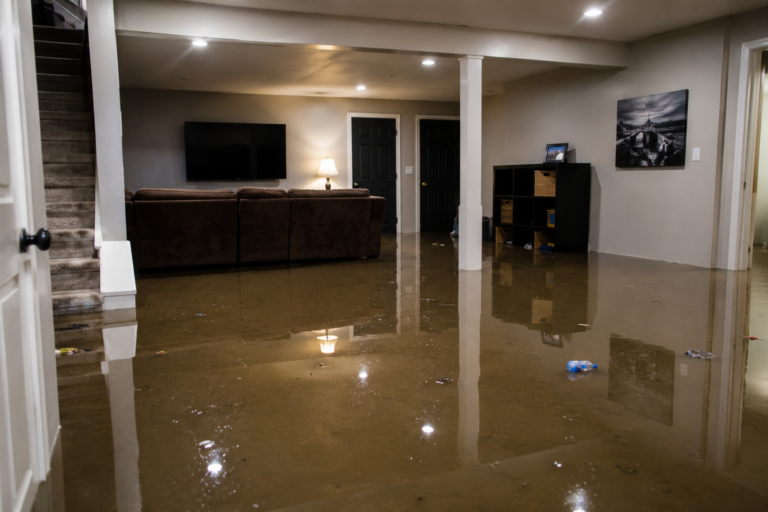
Most water damage does not announce itself with a flood. It starts small. A slow drip behind a wall. A slab leak you cannot see or hear. A roof penetration that only weeps during heavy rain. By the time visible damage appears on your ceiling or floor, the moisture has usually been sitting for weeks or months. In Santa Ana, the combination of aging housing stock, concrete slab foundations, and periods of intense rainfall followed by heat creates ideal conditions for hidden damage that gets missed until it becomes expensive.
1. A Musty Smell That Does Not Go Away
Mold has a distinct earthy, musty odor that most people recognize immediately. What they miss is that the smell can be coming from inside a wall cavity, under a floor, or inside an HVAC air handler long before any visible growth appears. If a room consistently smells musty no matter how much you clean or ventilate, moisture is present somewhere you cannot see it. In Santa Ana’s warm climate, mold can begin growing on wet organic material within 24 to 48 hours. A persistent odor usually means it has been going for days or longer.
2. Unexplained Increases in Your Water Bill
A slow slab leak can lose hundreds of gallons per month without producing any visible surface water. A sudden unexplained increase of 10 to 20 percent in your water usage without a change in household habits is a classic warning sign. Slab leaks are especially common in Santa Ana’s mid-century neighborhoods, where homes sit on concrete foundations and copper supply lines have been in the ground for 50 or 60 years. Soil movement and corrosion are the main culprits. You will rarely hear or see a slab leak. Your water bill will tell you first.
3. Soft, Spongy, or Discolored Drywall
Press gently on the drywall in bathrooms, utility rooms, and areas near exterior walls. It should feel solid. If it gives slightly, sounds hollow in a new way, or has started to bubble or discolor, moisture has been sitting inside the wall cavity long enough to compromise the gypsum. In the older homes throughout Floral Park and Morning Sunwood, some walls are original plaster-over-lath rather than modern drywall. Plaster handles moisture differently, and soft spots or hairline cracks near the floor can indicate moisture wicking up from a crawlspace below.
4. Warped, Buckled, or Soft Flooring
Hardwood floors that were flat last month but now have ridges, cups, or gaps between boards have absorbed moisture from somewhere below them. This happens under two main scenarios in Santa Ana: a slab leak pushing moisture upward through the concrete, or a slow supply line leak inside a cabinet or wall that has been spreading laterally under the floor. Vinyl plank flooring will separate at the seams. Tile flooring may feel slightly hollow or loose underfoot when the adhesive below has been compromised by moisture. Any floor change that appeared without an obvious spill event is worth investigating.
5. Visible Mold Growth Near Baseboards or Under Cabinets
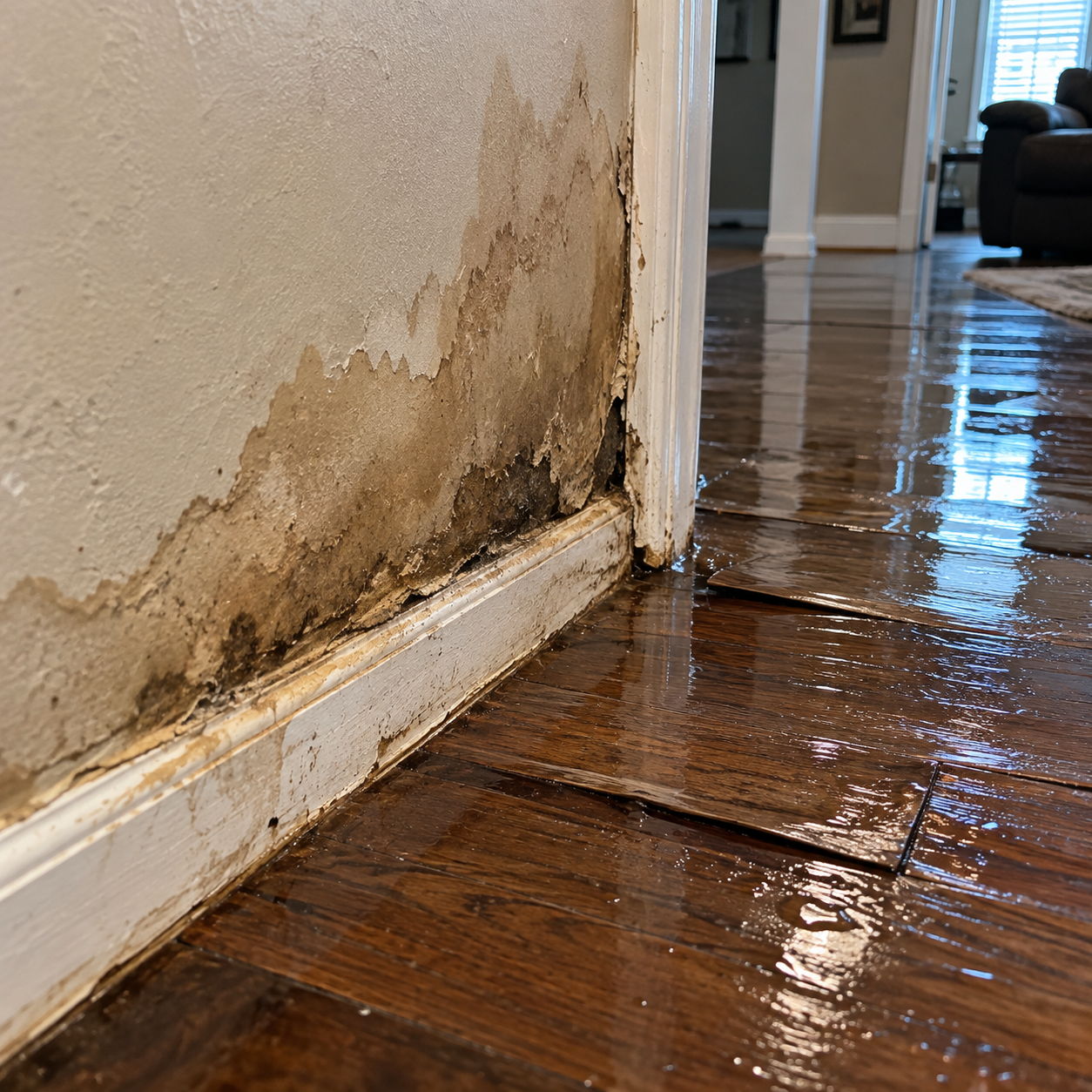
If you can see mold, the situation is already beyond early-stage. Visible growth at the base of a wall means moisture has been present long enough to support an active colony, which typically requires at least a week of sustained wetness. Check under the kitchen sink, under bathroom vanities, behind the refrigerator, and along the lower sections of exterior walls after significant rain. The mold you can see at the baseboard is almost always a fraction of the total growth happening inside the wall cavity. The EPA’s mold resources confirm that surface-visible mold rarely represents the full extent of contamination. See our mold remediation page for what full remediation involves.
6. Stains or Rings on Ceilings and Walls
Yellow or brown rings on ceiling drywall are the most recognizable sign of a water intrusion that happened and dried. The stain is the mineral deposit left behind after the water evaporated. A single dry stain might indicate a one-time event that resolved. Multiple rings of different shades indicate repeated wet-dry cycles, meaning the leak is ongoing. After atmospheric river rain events, which have intensified across Southern California in recent years, slow roof penetrations around vents, skylights, and HVAC flashing often leave exactly this pattern.
7. Doors or Windows That Stick or No Longer Close Squarely
Wood swells when it absorbs moisture. A door or window that worked fine six months ago but now sticks, drags, or closes out of square has likely had its surrounding framing affected by moisture. In Santa Ana homes with wood-frame construction and raised crawlspaces, persistent soil moisture or a plumbing leak in the crawlspace can wick up into framing and produce exactly this result. It is worth having it inspected before assuming it is just a settling issue.
8. Peeling Paint or Bubbling on Walls Near the Floor
Paint peels from the inside out when moisture is present behind the surface. On interior walls, bubbling or peeling near the bottom of the wall often means water is traveling up from a wet slab or a crawlspace with drainage problems. Santa Ana’s periodic heavy rains push water against exterior walls in ways that expose any existing weakness. If your paint is peeling near the foundation line or around window frames, the source is almost always moisture-related. Our team has the moisture meters and thermal imaging needed to find it without opening walls unnecessarily. If you see any of these signs, our water damage restoration team is available 24 hours a day.
Frequently Asked Questions
Mold can begin growing on wet organic materials within 24 to 48 hours in Southern California’s warm climate. Hidden moisture behind drywall or under flooring creates the ideal environment because it is dark, warm, and undisturbed. By the time you smell mold, it has typically been growing for at least a week.
The most common causes in Santa Ana are slab leaks in homes built on concrete foundations, aging galvanized or cast iron pipes in historic neighborhoods like Floral Park, and slow roof leaks after atmospheric river rain events. AC condensation line clogs are also a frequent culprit in the warmer months.
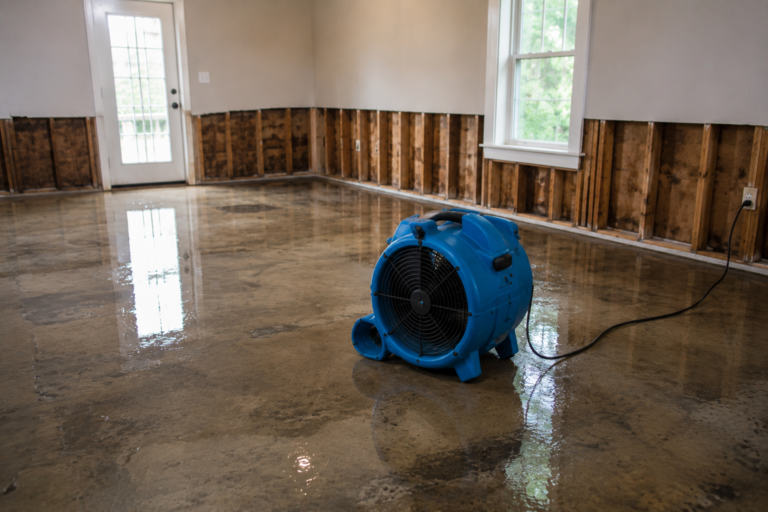
Surface drying you can see is not the same as structural drying. Hidden moisture inside walls, under flooring, and in crawlspaces requires professional-grade moisture meters, thermal imaging, and desiccant or refrigerant dehumidifiers. DIY repairs that leave moisture behind will develop mold within days to weeks.
California homeowners insurance typically covers sudden and accidental water damage, which includes burst pipes and appliance failures. It generally does not cover damage caused by long-term neglect or gradual leaks. The key word insurers look for is sudden. Document everything before any cleanup begins.
Request a Free Callback
Tell us what happened and we will be in touch within 15 minutes.
Serving Santa Ana, Anaheim, Orange, Garden Grove, Costa Mesa, Irvine, Tustin, Fullerton, Huntington Beach, Newport Beach, Fountain Valley, Westminster, and all Orange County communities within 50 miles.